
Make Your Own Audiobook
A talk with my narrator and other tips to make a proper audiobook/podcast production

After putting out my first novel, Top of Mason, creating the audiobook seemed like an insurmountable task. “Self-publishing” meant that I was doing everything myself, and I’d figured out how to collaborate with friends or go at it alone for nearly every piece of the puzzle. Art and design for the cover, made-to-order physical copies, Kindle edition, a Shopify website, skate shop distribution, podcast interviews, “influencer” gifting, email and social media marketing. I even got a lucky LA Times feature and couple blurbs from a few surviving skate magazines for the back cover. But I knew there would be people out there who would only listen to an audiobook, and while I’m happy to read some prose, there was no way I was going to act out the dialogue for the characters I’d created. So when one of my best friends, Rudy Behrens, told me he’d started auditioning for voice acting gigs and was curious about doing audiobooks, I was thrilled! About ten months after the print and digital release, the audiobook was available.
Rudy has gone on to narrate all three of my novels, and as anyone who has listened can attest, he’s a natural-born voice actor. I shouldn’t have been surprised that he’d be good, of course. He’s a terrific actor, hilarious improv comedian and all around awesome stage presence. But to pull off three dialogue-heavy books—three hundred thousand words of talking in different tenses, styles and accents—is a serious feat.
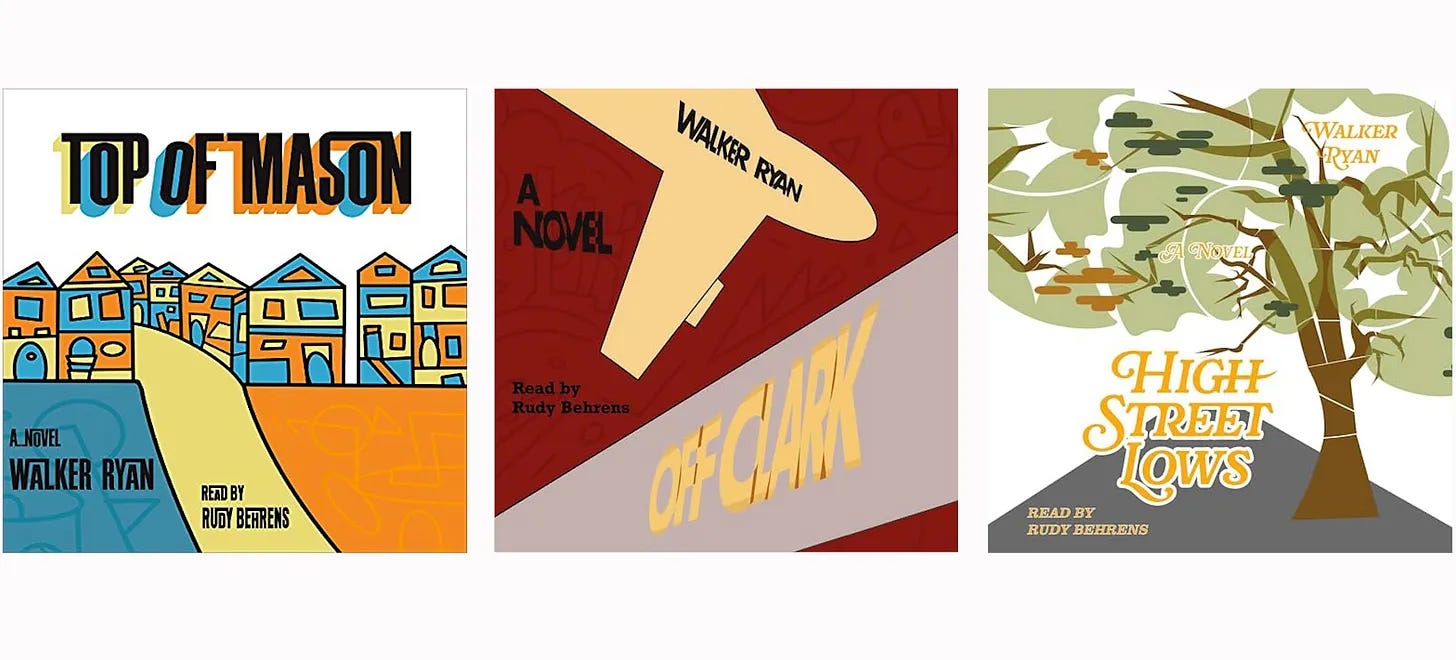
In addition to my three novels, Rudy narrated Flamingo Thief, a novel written by my grandmother, Susan Trott. While she published fourteen novels in her career, she only has one other audiobook, The Man on the Mountain Top, and the main narrator is Stanley Tucci. So Rudy is in good company.

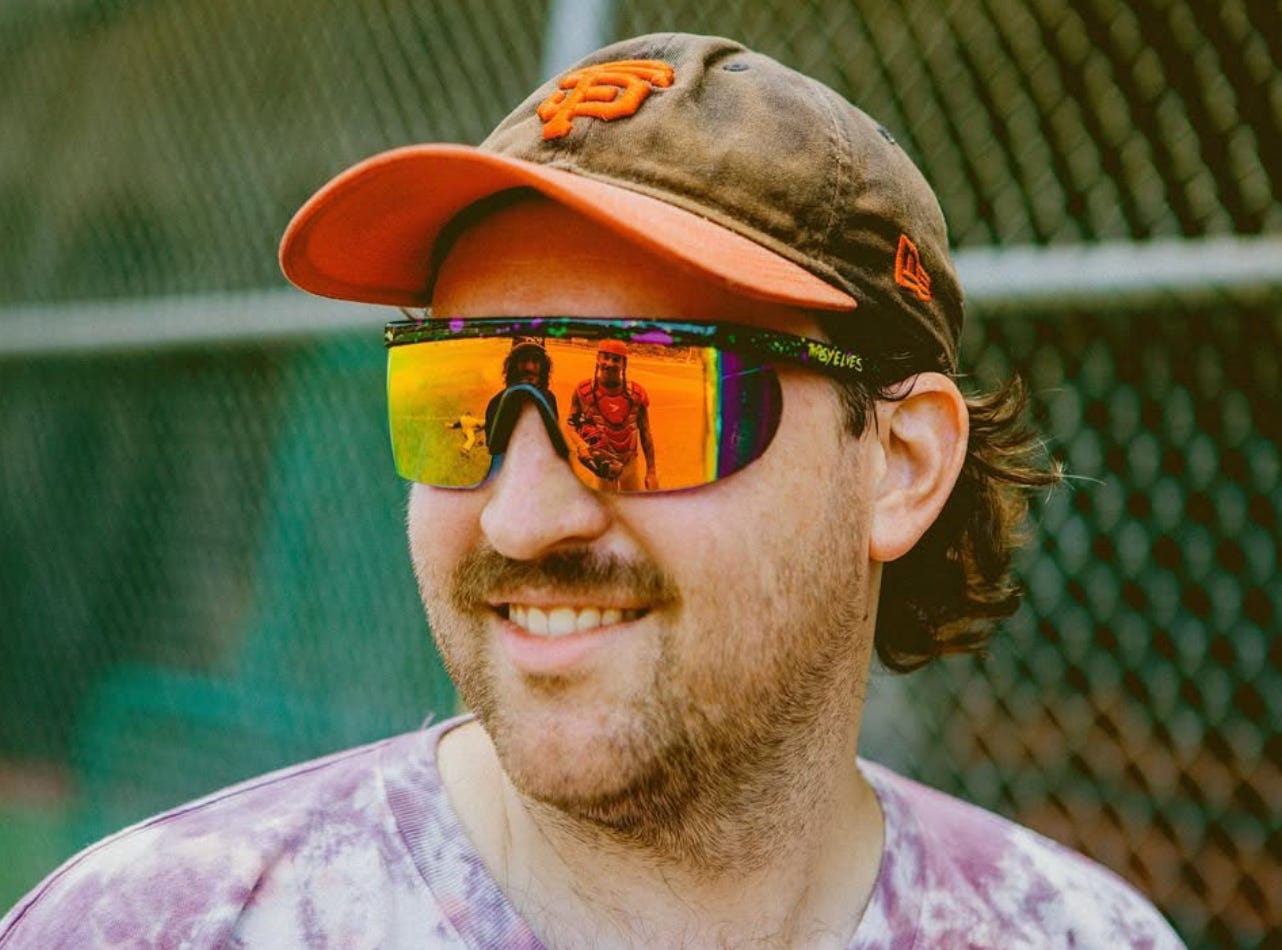
I met Rudy in fourth grade and we quickly became friends through a shared love of Will Smith albums, Harry Potter, and skateboarding. We skated and/or nerded out on skate videos pretty much everyday until the end of high school. His part in Sk8Helena (2001-ish) by Justin Corbett is infamous around town. Rudy eventually moved to New York City where he performed with the Upright Citizens Brigade for over a decade. Today, Rudy lives in LA where he is raising his son with his equally talented wife Liz Noth (who also helped narrate Off Clark). He is currently working for a brewery, playing semi-serious baseball, and squeezing in voice acting work in his closet studio, among other creative endeavors. We still skate together every chance we get and Rudy continues to have a much better heelflip than I ever will. I asked Rudy about his experience recording audiobooks so far, here’s his take:
WR: What’s the hardest part about recording at home?
RB: The hardest thing was not having an actual soundproof booth. So I’d find a time to start reading when I thought I could really get a lot done. And then immediately the leaf blowers start going, or a helicopter starts flying overhead, and I just had to pack it in for the day.
What was the most annoying sentence I made you say?
I can’t remember specific annoying sentences, but there were definitely a handful of times where I had to edit out me cursing your name for a word or sentence that I had trouble enunciating. To be honest, I probably blocked them out from my memory.
Do you have a favorite of the books you’ve narrated?
I think Top of Mason was my favorite to record, probably because it was the first one and it was just exciting to be doing it, period. Plus, I remember really getting into the hill bomb scene, and it was the first time I just felt myself flowing in the “booth.”
Did any characters you read particularly stick with you?
I think recording Richie for Off Clark was the most fun. I just knew how he should sound right away, and it was really easy to slip into his voice. Apparently paranoid stoner is an easy place for me to go.
Any characters you dreaded?
I’m pretty happy with how it turned out, but man, it was hard to do a British accent for Mo for an entire book. I don’t think I’m particularly good at it, and to be honest, it’s not my favorite type of accent to hear.
What advice would you give aspiring audiobook narrators?
I would say do more research ahead of time than I did. And even when you do it, be prepared for a lot of trial and error. Give yourself plenty of breaks and realize that sometimes you’re just not in the right headspace to record.
Any voice acting heroes or recommendations?
I grew up on Jim Dale reading the Harry Potter series and Tim Curry doing the Series of Unfortunate Events, and Jim Dale just was so good at the characters voices being subtle, but switching right into them pretty flawlessly. And Tim Curry could just deliver a dry, funny line perfectly. I also like a lot of voice actors in the animated comedy world, and the first one that comes to mind is Maya Rudolph in Big Mouth.
What have you noticed about listening to audiobooks since you became an audiobook narrator?
Honestly, I haven’t actually listened to an audiobook in years. I actually prefer to just read them, and most of my listening is podcasts, which I know is not actually very cool. Also, most of the audiobooks I’ve listened to were road trip listens and that’s kind of tough with a five year old.
What drives you crazy about other narrators?
The thing that immediately turns me off is when a reader goes really hard on characters’ voices, like makes a really big choice and is trying to act the hell out of it, which rarely works. Sometimes it does, and when it works, it’s great. But if that’s not working, it’s a big swing and a miss, and I find it pretty unlistenable. I’d rather somebody just do a subtle version of a character and not try to bring them to life. At the end of the day it’s somebody reading a book to you instead of you reading the book. So I still like the reader to leave some of this up to my or the listener’s imagination.
Interested in making your own audiobook or podcast? This rest of this article focuses on the tools you’ll need to process audio in Adobe Audition. Audiobook hosting platforms have very specific quality control requirements, and while the process is kind of a pain, the listening experience makes it worthwhile. Keep reading for a step-by-step guide, along with suggestions for how to upload, publish and invoice.
