
A common gripe about the current “State of Skate,” is that there aren’t as many shoe sponsorship opportunities for professional and amateur skaters as there were back in the day. The argument claims that since corporate, athletic shoe brands like Nike, adidas, and New Balance have entered skateboarding, they’ve taken over the market and most of the “skate” shoe brands are gone. With fewer brands, it becomes more difficult to get a sponsor and make a career. I’ve made the same complaint myself, but lately I’ve been questioning the veracity of that argument. Is it really true? Are there really fewer brands and less opportunities now as there were back in the day?
2006
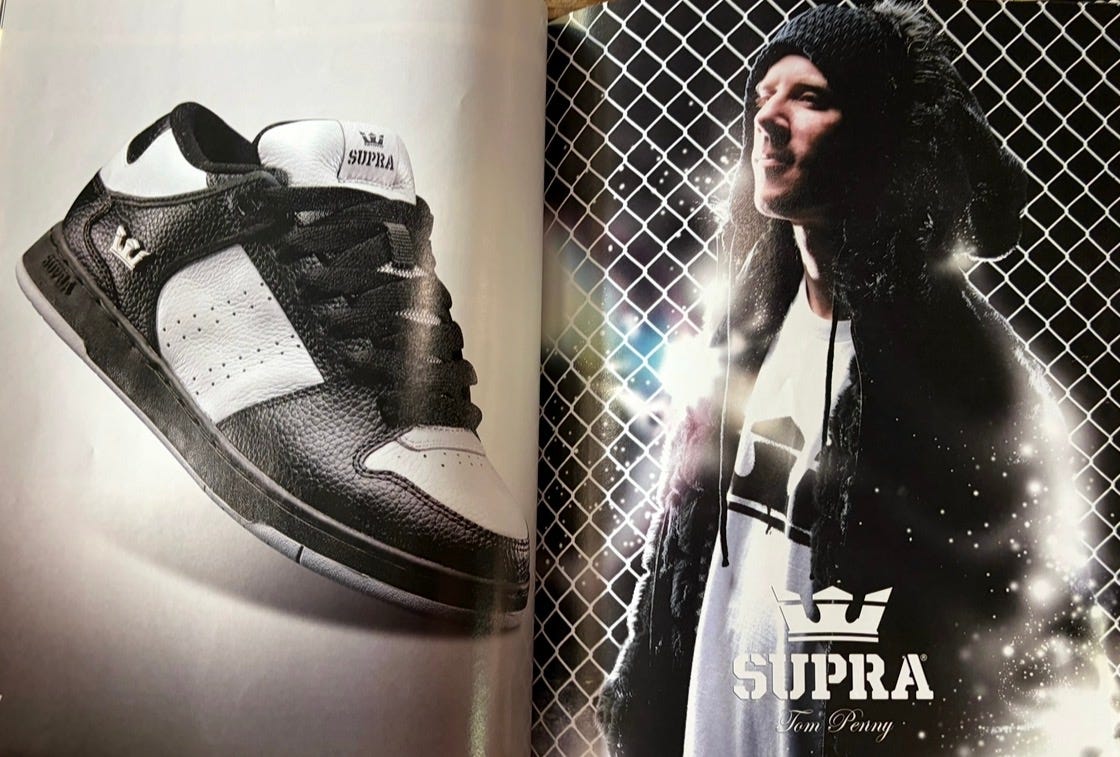
Let’s look at 2006. Not as far “back” in the day for some, I’m sure, but it’s a clean twenty years ago and an important year for a few reasons. Bulky shoes were still in, with slimmed down models making their move. Supra just started, Nyjah was on éS, and Fully Flared hadn’t come out yet. Nike (SB) was only a few years in and adidas was just launching. Converse hadn’t even started their skate program. Most of the traditional skate shoe brands were still dominating the market. These were brands that, from my perspective as an eighteen-year-old, seemed like massive corporations. Not only were these brands what all skateboarders wore, they felt ubiquitous, transcending skating. Jocks wore C1RCAs. Dads wore DCs. Hippies wore IPATHs. Cheerleaders wore etnies. Everyone wore D3s. Non-skaters wore skate shoes.
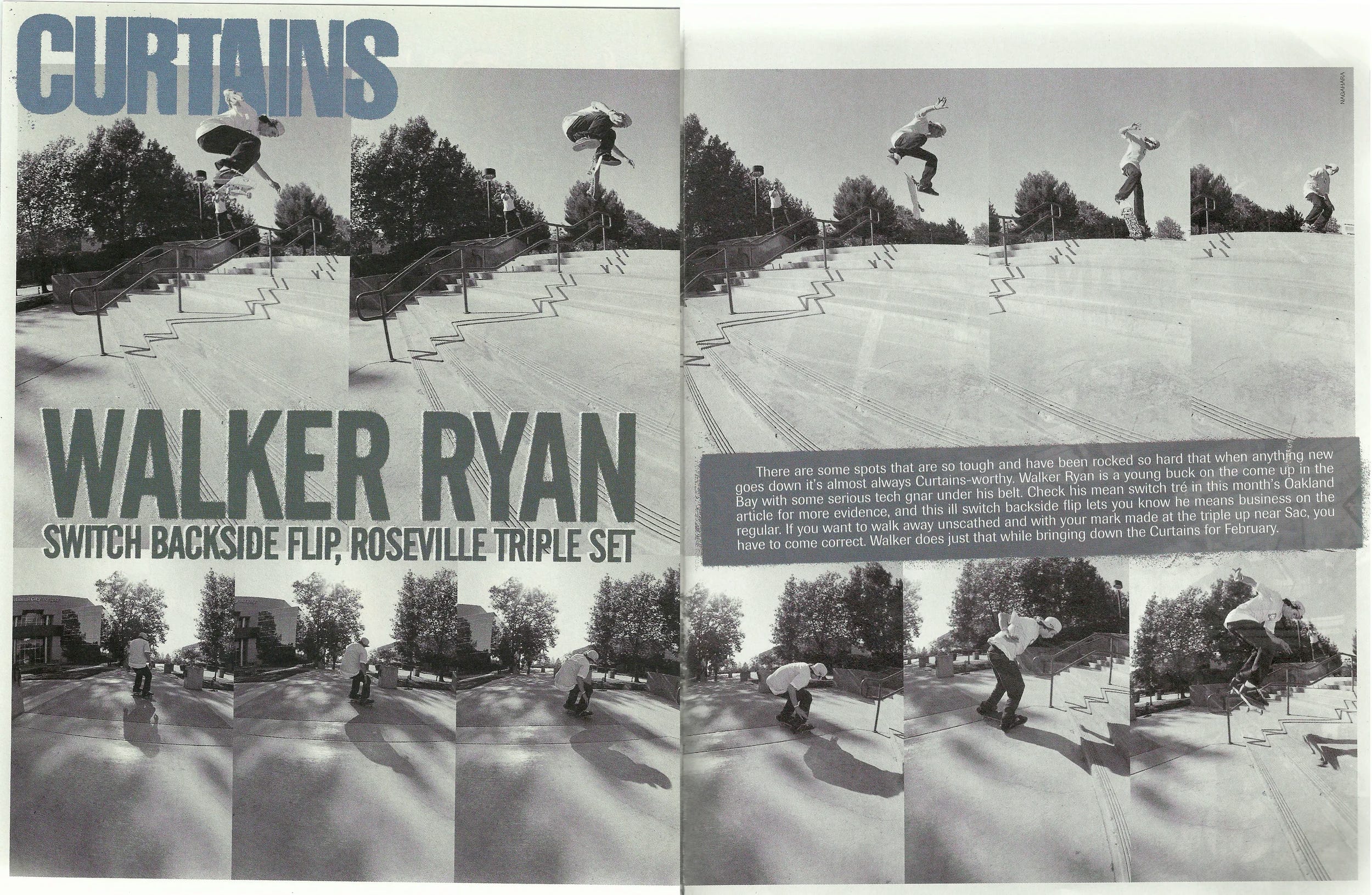
On a more personal note, 2006 is a fun year for me to look back on because I was just on the precipice of entering the industry as a contracted, amateur skateboarder. I moved to UCSD in the fall of 2006 to study philosophy, as my application claimed, but my true field of study was skateboarding: The mags, the videos, the early content websites. San Diego was conveniently one of the industry epicenters and I was determined to get my foot in the door. The gateway for entry was to get sponsored by a shoe company. The proof of that status was an ad in the mag.
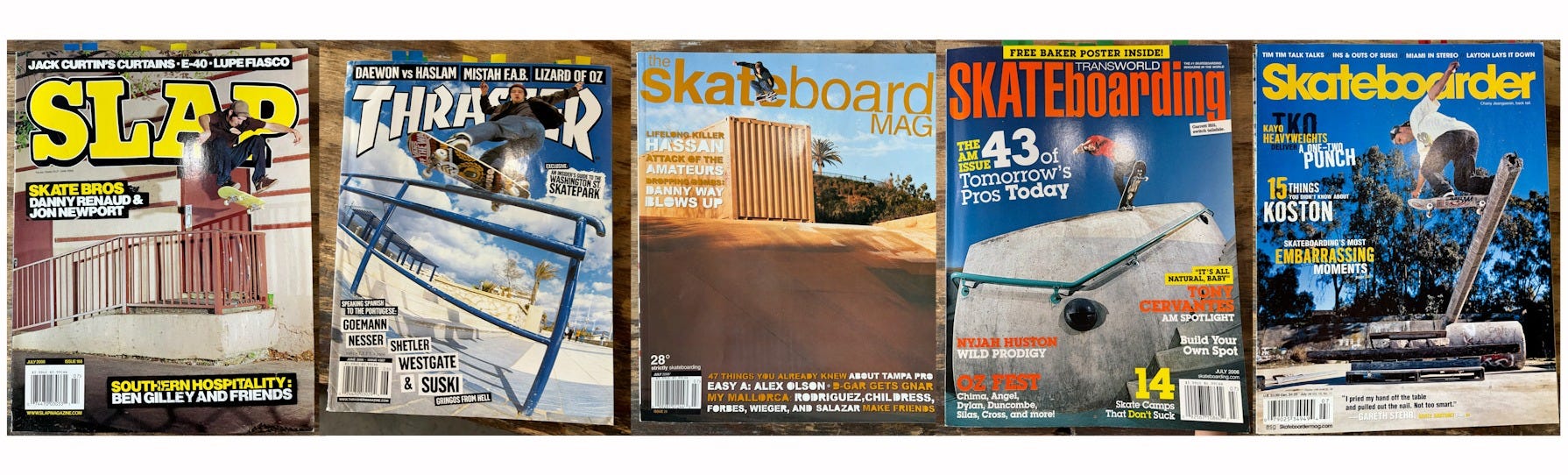
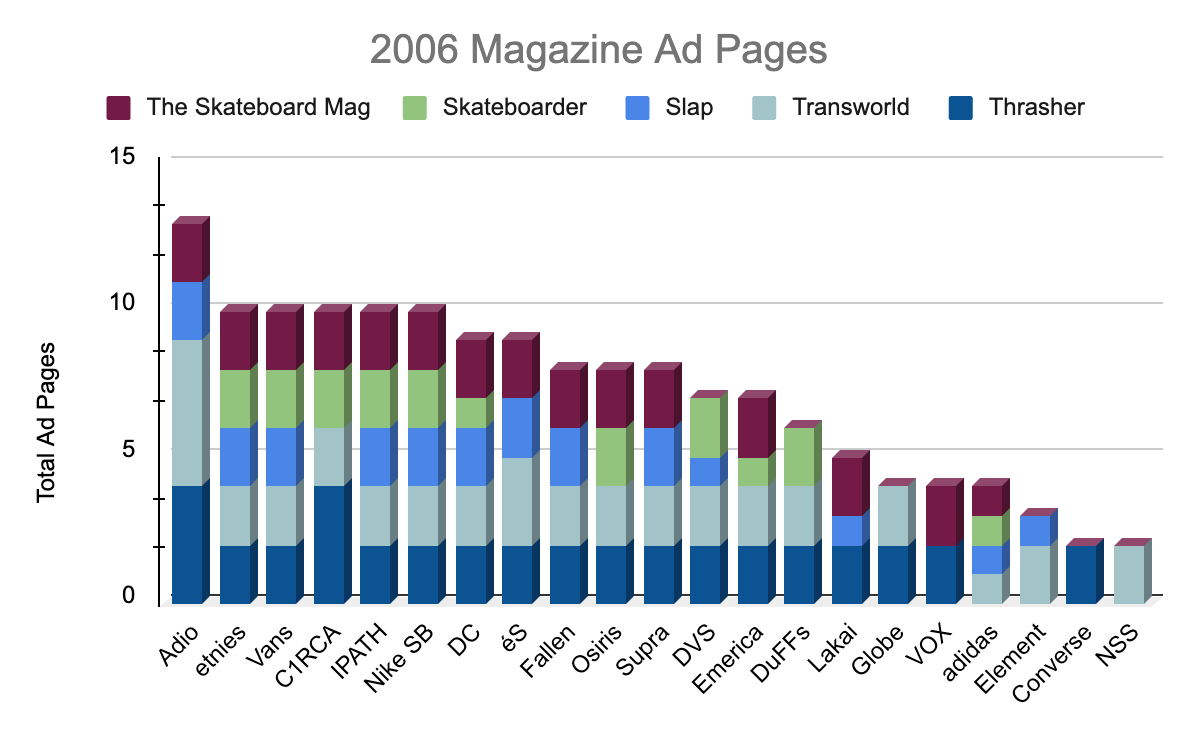
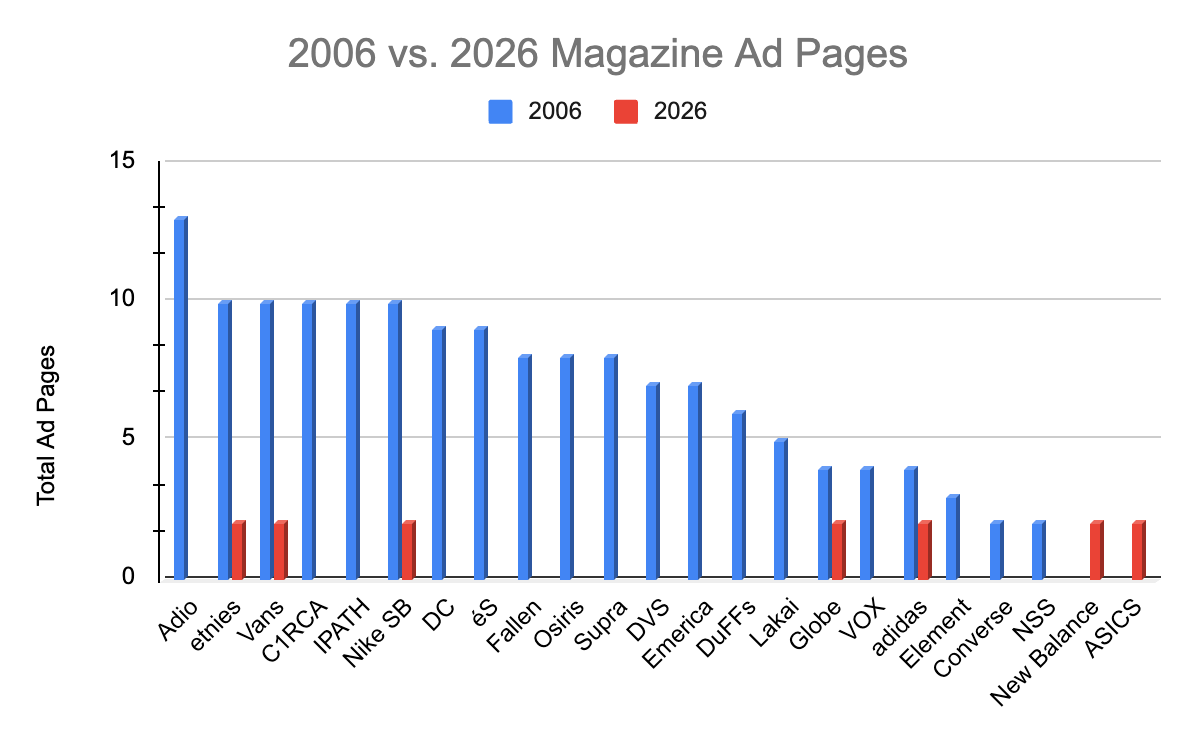
In 2006, if a brand wasn’t advertising in at least one of the major magazines, they probably weren’t sponsoring skaters. Back then, there were five monthly mags: Thrasher, Transworld, Skateboarder, The Skateboard Mag, and Slap. There were dozens more smaller mags, if you include regional publications like Automatic, Focus, Kingpin, Color, and Strength, but we won’t be examining those today. Thanks to Kevin at Lookback Library, who has an archive of pretty much every major mag ever published, I was able to take a look at the printed shoe ads from July 2006. There were twenty-one shoe brands that advertised in either one or all of the five monthly mags that month. Rates for ad pages vary from mag to mag, but this chart suggests who had a budget in 2006.
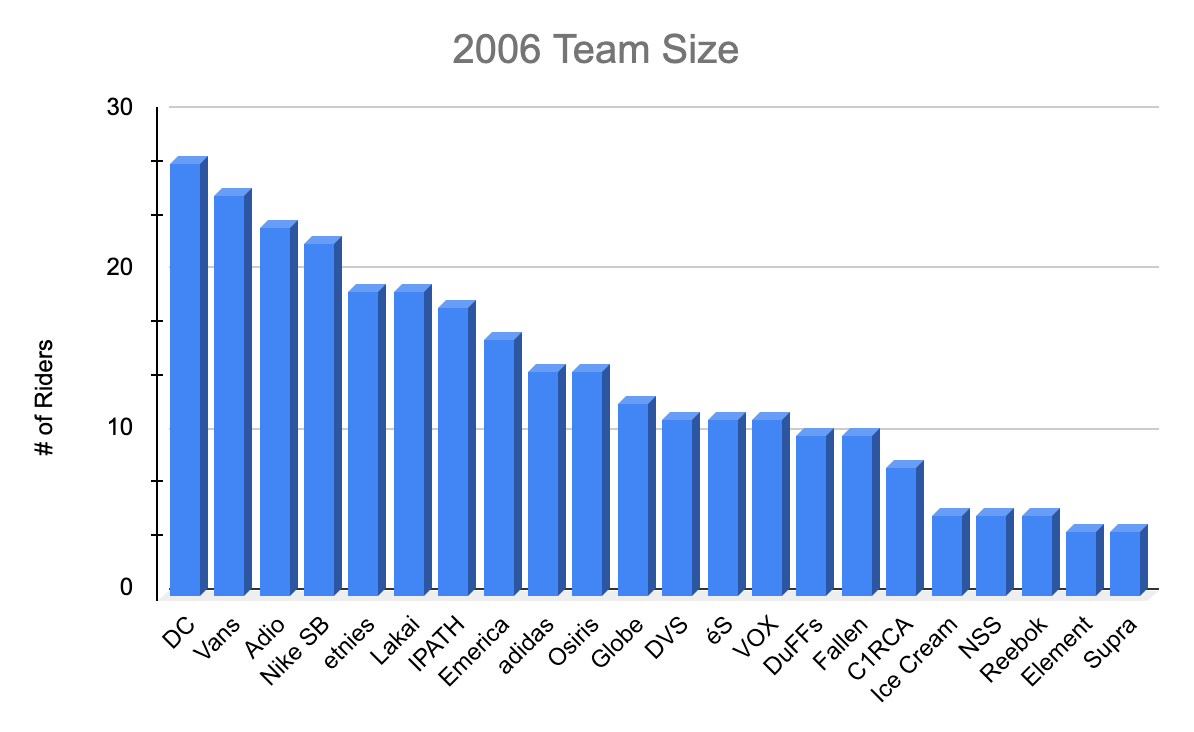
Who was on the team?
Fortunately, answering this question was a pretty straight forward process of internet sleuthing. In ‘06, if you were on the team, you were likely included in their marketing materials, which were primarily ads or big videos. These videos often took years to make, so any video that came out in ‘06 or ‘07 offers a solid snapshot of who was on the team. Converse is the only brand that was running ads that month without a team. The only brands that I could think of that had teams but weren’t running ads that month were Reebok and Ice Cream. Big shout out to Skate Video Site for their incredible archive of skate videos, soundtracks, and skaters.
Who is active in 2026?
Now let’s look at the modern era, starting with advertising power. Today, Thrasher is the only major monthly mag that’s survived, and while there are new mags that sell ads (Closer, Free, Low Card, Skate Jawn, Vague, Pocket, Dolores, etc.), they are regional, upstarts, or publish infrequently. Looking at the September 2026 issue of Thrasher, there are only seven shoe brands running ads: Vans, New Balance, Nike SB, adidas, etnies, ASICS, and Globe.
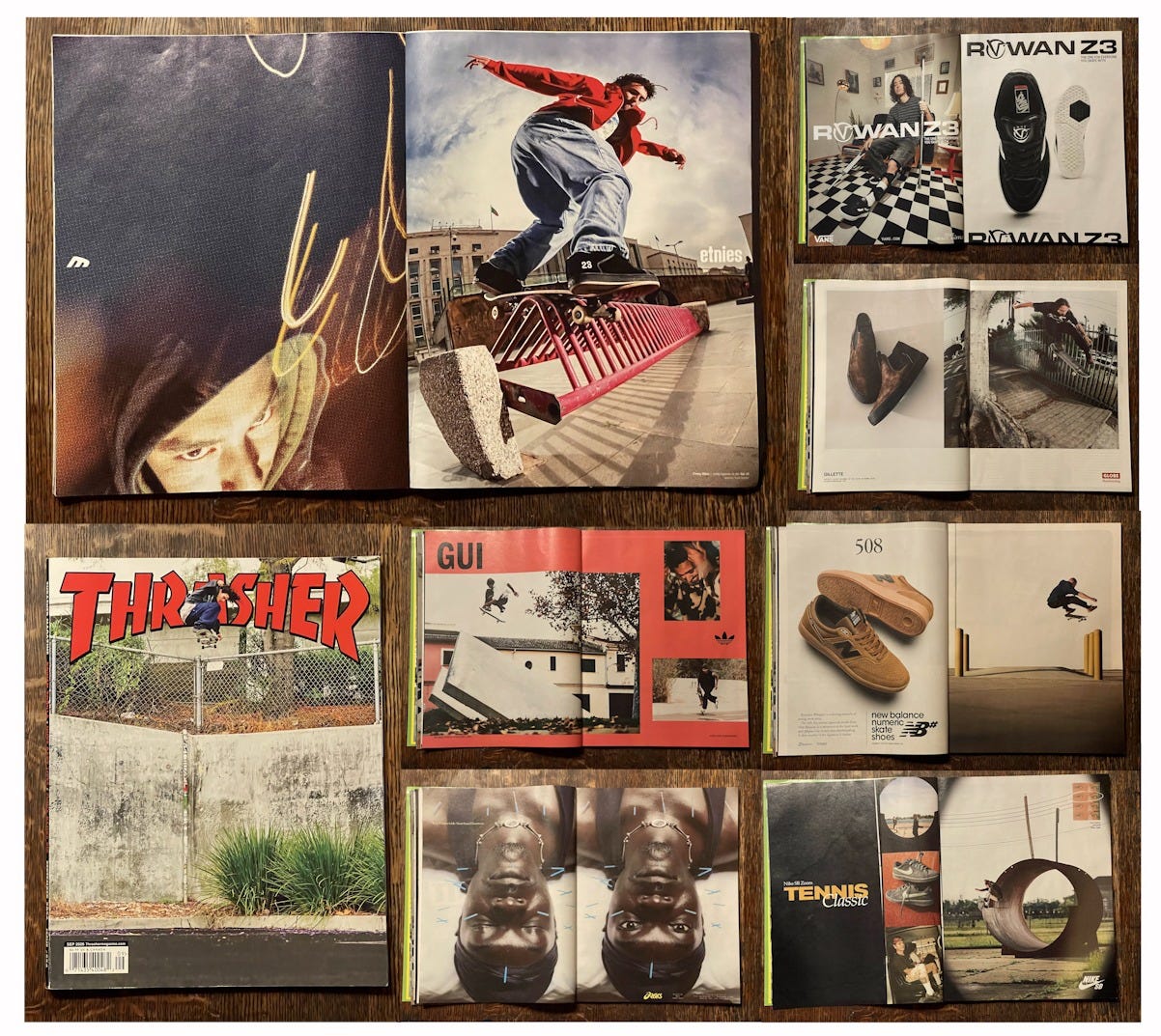
In 2026, magazine ads are only a small indicator of a brand’s influence and budget. Also, some brands run staggered ads throughout the year, so this September snapshot is not necessarily representative of all shoe brands running ads this year. There are also many other ways to advertise: Meta ads, Tiktok ads, web banners, YouTube, smaller mags. After poking around at the existing brands and their websites, I have since been pummeled with targeted ads in my email, IG feed, and elsewhere. Measuring those methods and guessing what sort of budget each brand is working with is not the goal for this investigation. I’m looking for a more general vibe check.
What is a skate shoe brand in 2026?
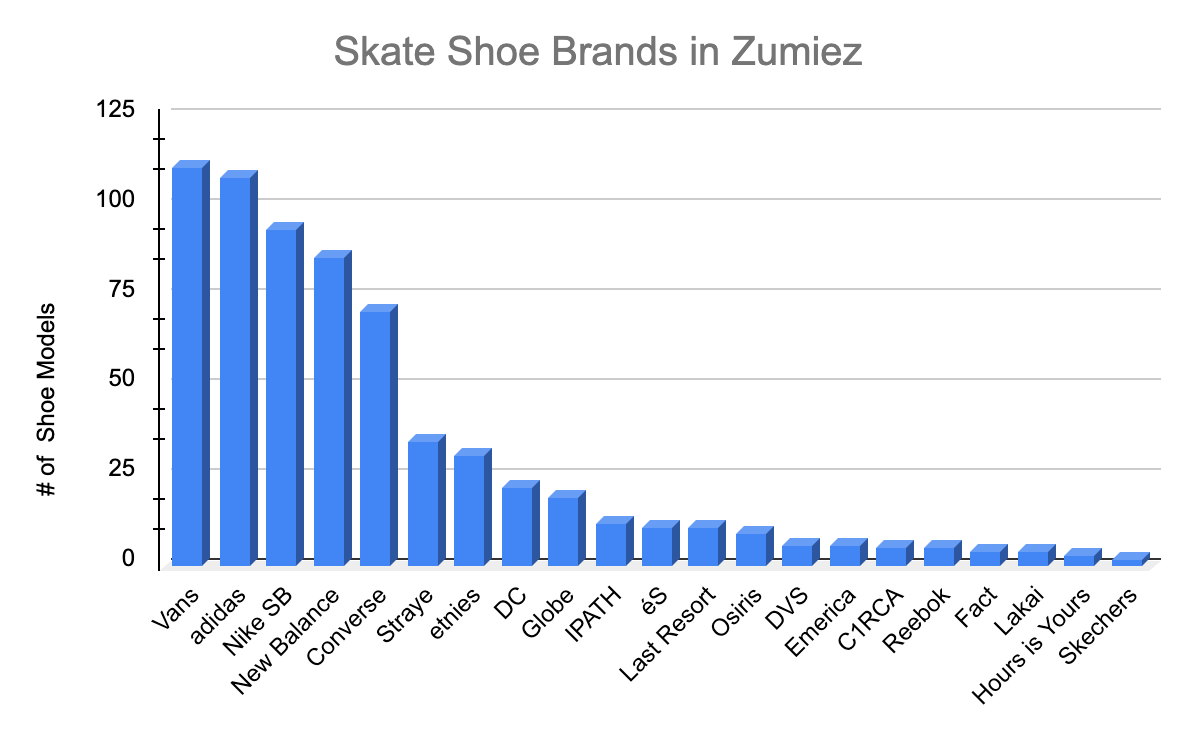
Figuring out what a “skate” shoe brand is in 2026 is tricky. Advertising power in September’s Thrasher might lead one to presume that there are only seven brands marketing to skaters, but we know that’s not true. For a market baseline, I looked at Zumiez. Love ‘em or hate ‘em, Zumiez and their 700+ retail locations across the world are keeping this industry alive. And while skate shops are vital for the culture and local scenes, there are only a few brands calling themselves “skate” companies that aren’t selling in Zumiez. There are even a few brands I assumed were long gone, like Osiris and C1RCA, that are still selling in Zumiez. The only skate shoe brands that existed in 2006 and don’t exist in the skate market today are Adio, Duffs, Element Footwear, Ice Cream, NSS, Supra, and VOX. Comparing the Zumiez list with the ‘26 advertisers in Thrasher, ASICS was the only brand not selling in Zumiez. The general expectation is, if they’re selling in Zumiez, they should have some sort of skate team. To get a sense of how many shoe models each company currently sells there, here is a breakdown of what’s available online.
There are other brands that currently exist with sponsorship opportunities for skateboarders. They don’t consistently advertise in Thrasher, nor do they sell in Zumiez. Some are transparent about their retailer availability and team riders, others are not. These brands include Fallen, Village P.M, FP Footwear, Strike MVMT, R.A.D, and Warsaw.
Who sponsors skaters?
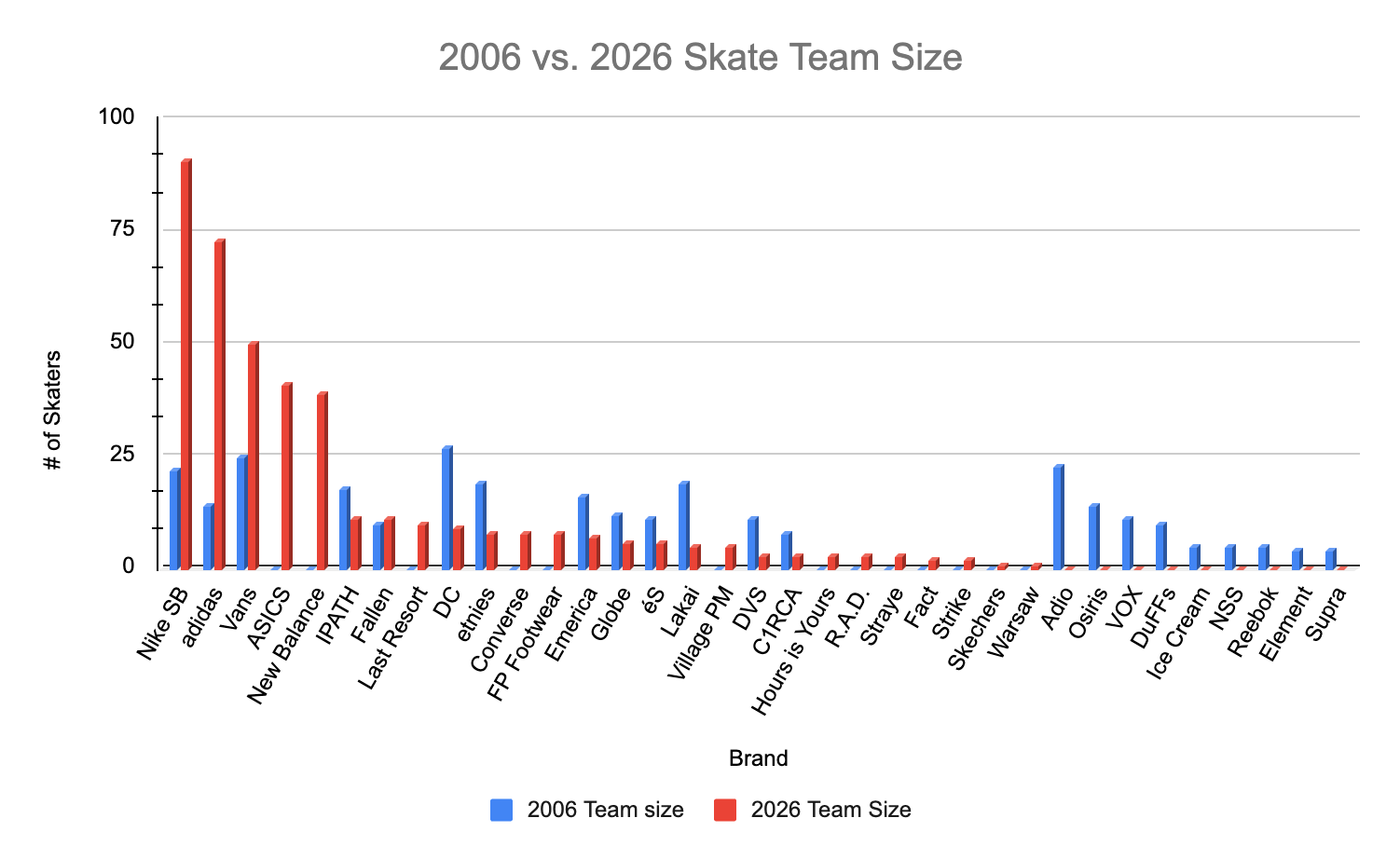
Finding out exactly who is on which team is a challenge, because most companies no longer publish team lists on their websites. And if they do, they’re usually incomplete or outdated. For the purpose of this survey, I did not use any “inside” information. I did not reach out to team managers for lists. I simply gathered names like I did for the ‘06 count, or like any consumer might today. Who are these brands showing me they sponsor through tour videos, full lengths, promos, ads and social media edits? Who are the pro, am and legend status skaters they use for marketing? Companies large and small keep this information extremely opaque. Of the athletic brands, adidas is the only brand whose website offers a somewhat up-to-date team list. And ChatGPT and Google AI are pretty useless. For example, when I asked, “Who is on the DVS skate team in 2026?” ChatGPT told me I was, and I haven’t been sponsored by them since 2017. Not sure when Cody left, but it sure wasn’t this year.

What does a “sponsorship” actually mean?
The short answer is, I don’t know. I would hope that every person included in this tally is a contracted rider, meaning they get an annual, untaxed salary. These 1099 contracts are usually two-to-three year agreements, with the pay ranging anywhere from $6,000 per year, to millions of dollars. A safe range for the average contract is between $24,000 and $120,000, annually. Unfortunately, I’m guessing a lot of the names included in this list are actually glorified flow riders. Free shoes, a light travel budget, but no annual salary. The “opportunity” lies in being promoted by the brand, a smokescreen of validation and extremely exploitative behavior. One day I hope to complete a true audit of what all these shoe companies actually pay their skaters. But just like the companies keep their team lists opaque, what they pay their riders is even more highly classified. Throughout my years traveling as a pro and working for brands, I found that money was rarely discussed between riders.
2006 vs. 2026
I’m not going to lie, I was pretty shocked by the results the ‘06 to ‘26 comparison. It turns out there’s almost 40% more sponsored skaters now as there were back then. I totally assumed the early aughts were better for working pros. But based on these numbers, that’s not the case. Now is as good a time as any to be spons’d. There are other considerations to be made when thinking about these figures. Has the market grown? Is the ratio of talented skaters and sponsored skaters more skewed? Are there more people actively skating? The discourse on that is pretty mixed, and many seem to think skateboarding as a pastime for the youth is in decline. While these factors matter, I’m more interested in a general comparison. So here we go:
In 2006, there were 22 skate shoe brands, sponsoring a total of 293 skaters.
In 2026, there are 26 skate shoe brands, sponsoring a total of 410 skaters.
Concentration Risk
There’s another part to this, of course. A fear that if (and when?) the big companies decide to leave skateboarding, there will be nothing left. A vacuum. The athletic companies don’t really need skateboarding. So what happens when they leave?
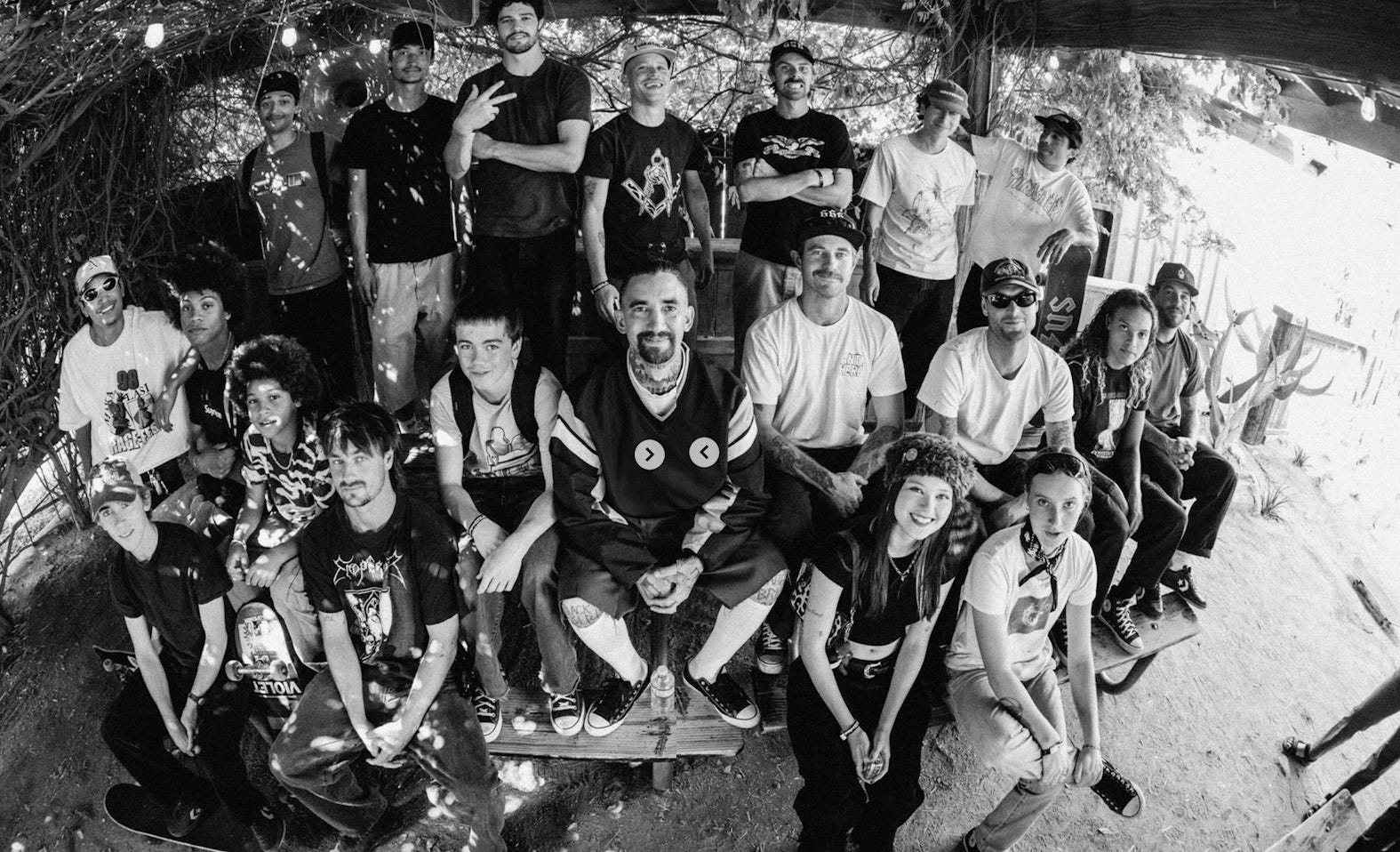
During the last twenty years, it’s interesting to think about the companies that have come and gone in the skate space. Huf, Cariuma, Gravis, Habitat, Puma, Axion, Praxis. Most notable, and still in the process of exiting, is Converse. In 2009, Converse initiated their longest effort to establish a presence in the skate market: Converse CONS. From that launch until early this year, CONS was thought to be one of the big dogs. A corporate giant you’d be lucky to land a contract with. As a sponsor they were relatively loyal to their riders, paid decently, and if you got on you’d be supported and promoted. But big cuts started happening in 2025. By the end of the year, the team had dwindled, but was still relatively strong with a rough count of twenty-five to thirty riders (There are twenty in the above team pic, but knowing their roster there were at least five to ten missing). When I started this survey a couple weeks ago, the team count was eight. On the day of publishing, the team list is only four, with Milton Martinez confirming via Instagram that he was kicked off as well. So they’re down to three.
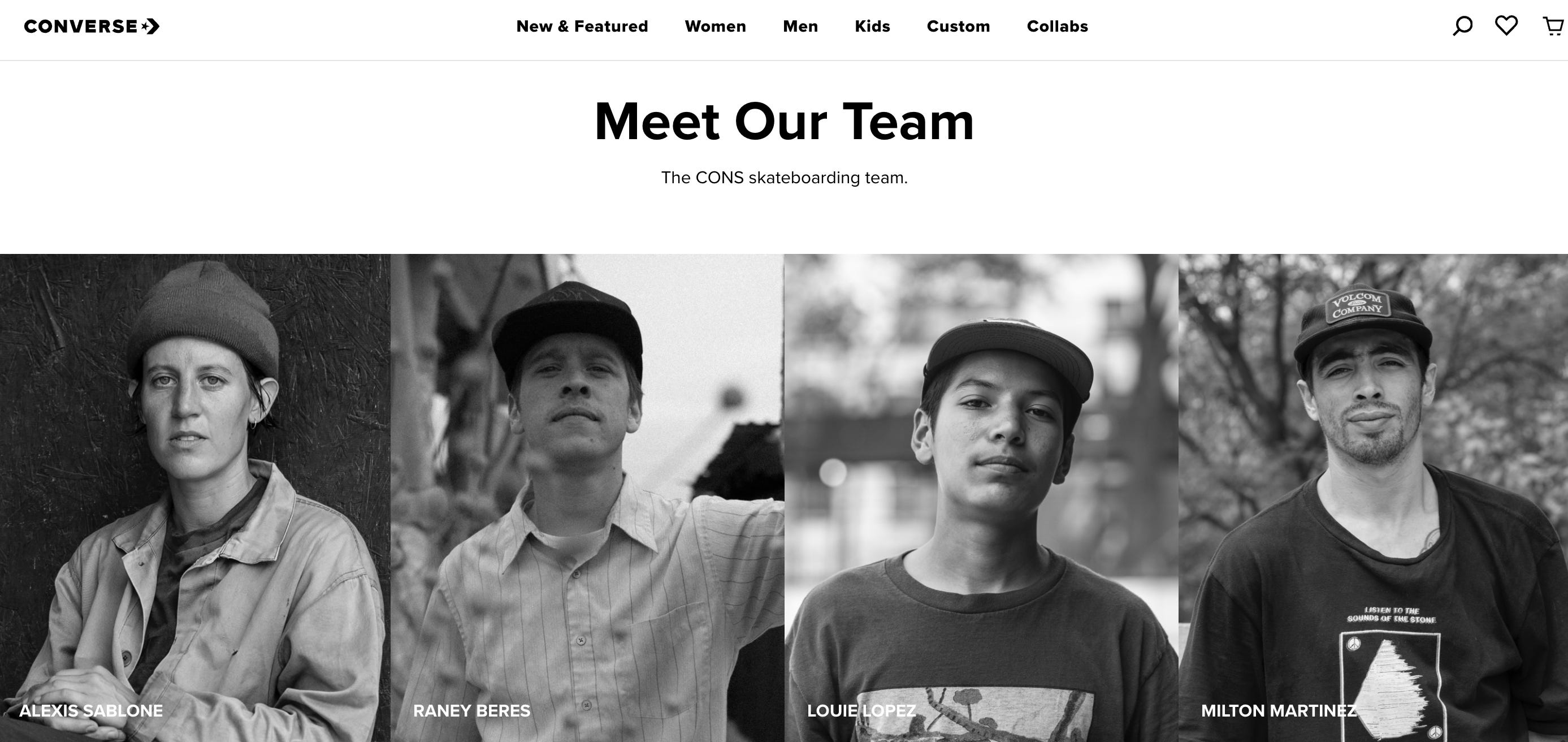
For a deeper dive into what’s happening at Converse, I suggest reading articles by Zach Harris, Boil The Ocean and Simple Magic. For a speculative look at what will happen to the new free agents, I recommend watching fusilli grind.
Today, athletic shoe brands (Nike SB, adidas, New Balance and ASICS) make up a majority of the sponsorship opportunities for skaters. Vans, while rooted in skate, is not much different from the athletic brands in terms of size and how they function as global corporations. A few years ago massive cuts were made to their program, with dozens of riders removed practically overnight. If these giants decide to call it, as Converse seems to have, where will the skaters go?
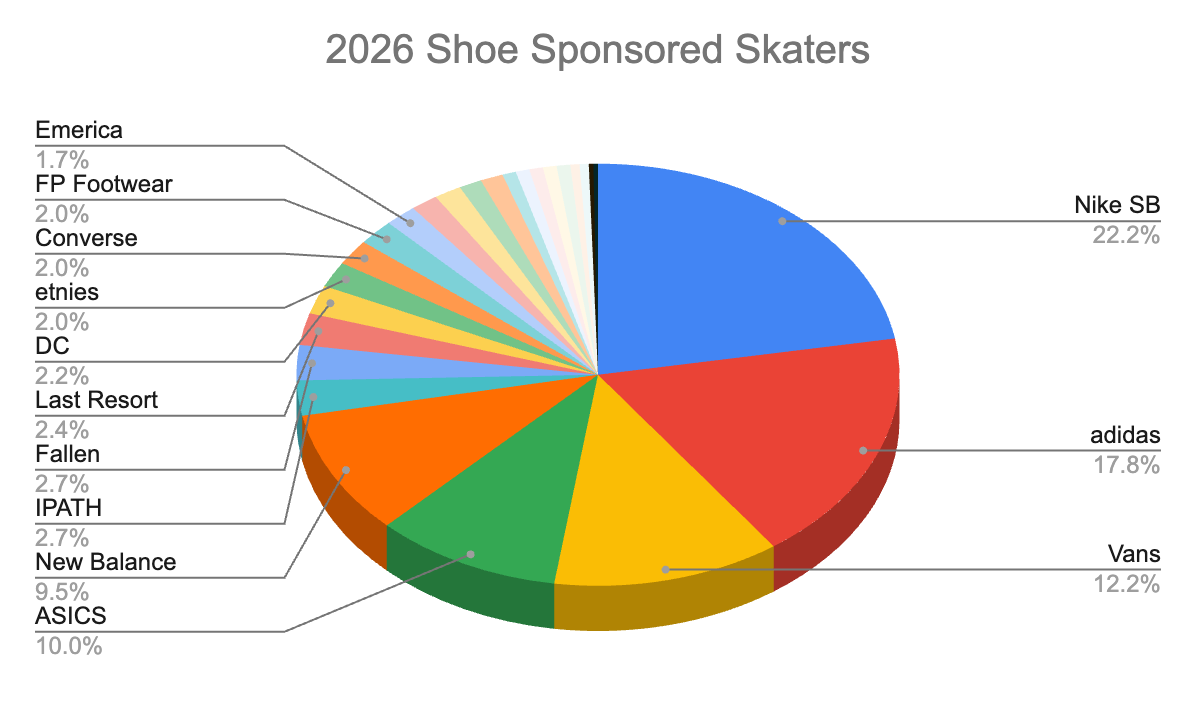
Throughout most of my professional career, I subscribed to the idea that “skate” shoe brands mattered. “Skater-owned” was important. But I no longer see any difference between the supposed “skate” brands and the big corporate giants. They’re all companies with a bottom line, who might support skaters but will just as easily drop them. If a skater’s brand gets big enough, he usually sells it off, and the riders who helped it grow see none of that profit. There is no brand with more or less integrity in my eyes. Look at the market today. The brands that came from skate and somehow still exist (Emerica, éS, C1RCA, Lakai, Osiris, DVS, Straye, etc), barely sponsor skateboarders or do much marketing. The giant corporations are keeping the culture alive.
So here we are in 2026. Yes, the big dogs dominate the market. But they also provide more opportunities than ever before. Tons of “skate” shoe brands exist, but they are not proving to be all that supportive of skateboarders. Hours is Yours, Fact, Warsaw, Village PM, Strike, and FP are trying, but their impact is to be desired. They have small teams and do very little marketing. Last Resort AB seems to be the only brand that is owned by a skateboarder, participates in all levels of the skate retail space, and uses a team of skateboarders as their primary identity. I’ve never tried their shoes, but I like their videos. So if your goal is to support “skater-owned,” I think the brands mentioned above are your (pun intended) last resort. Otherwise, just buy whatever you want to wear.
More about shoes . . .
Shoe Talk

Free shoes. For the dedicated skateboarder, there’s nothing cooler than the prospect of free skate shoes. Sure, boards are cool, but shoes feel extravagant. Lavish! Growing up, I usually got a new board for my birthday or Christmas, but my parents rarely bought me new skate shoes. Skate shoes had to last, and I was a master Shoe Goo applier. I’d save for the sale rack or get hand-me downs. I’ll never forget the pair of Danny Way pro models DCs that I found at Ross for $27! One time I scored a pair of brown éS Accels for half-off because the shop had a mixup and misplaced the last size nine pair. I skated one size nine (the display shoe) and one size ten that whole summer. After getting a shop sponsor,