
Thank you, Marc.
Rewatching my childhood hero's video parts

For me it was the socks. The white socks with white shoes and khaki shorts. A look I stole and ran with for years as a child. And the laces. The way they dangled loose and untied, his shoes mysteriously tight enough for him to do whatever the hell he wanted with his skateboard. I didn’t know how he did it without the laces slipping out or the shoes falling off, but I learned to tie a little knot on the outside at the desired length. I ran that one well into my teenage years.
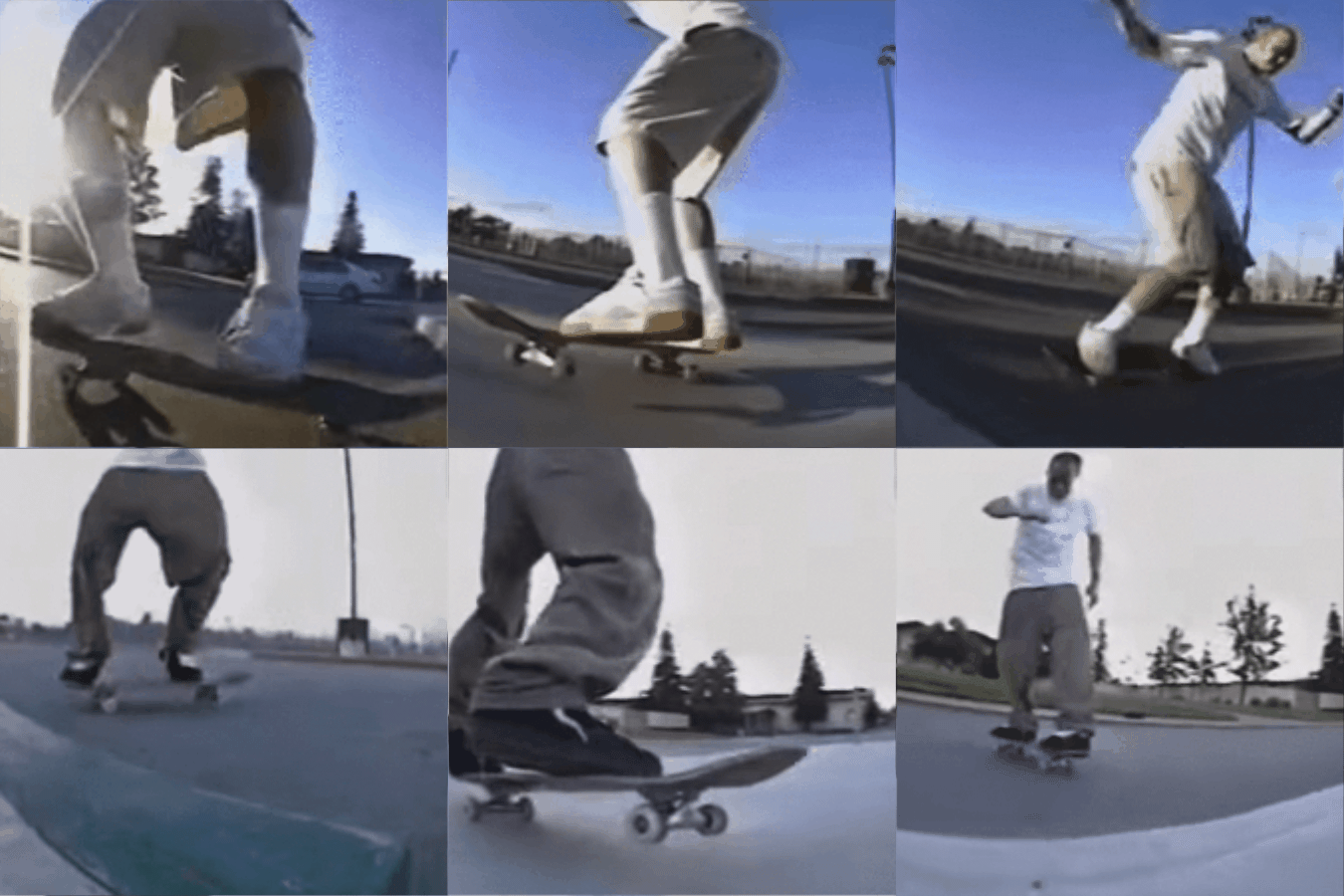
I first watched Marc Johnson ride a skateboard in 411VM Best of Volume 4 when I was nine years old. It would be years before I could really appreciate the magic he was doing with those untied shoes and socks and khaki shorts. Not only the difficulty of combos like the manual trick in that one line (a nollie bs flip fakie manual revert), but the subtle genius of the sequence of subsequent manuals (seen above). A satisfying completion. One of the many video part devices that Marc would use over the course of the next fifteen years. A way for him to share his superior intelligence.
411VM Best of Volume 4 (1997)
There were many other devices and qualities that cemented him as one of the most important skateboarders of all time, not least of which were his innovation, style, and productivity. His approach to sequences—stringing together tricks that work off each other at the same spot or similar ones—probably ranks low on what most people love about his skating. But it’s something I’ve always admired about Marc. The intentionality blended with spontaneity. The way some tricks probably happened without him thinking about them too much, and others made him absolutely suffer.
Pretty Sweet (2012)
A week before he died, I had the urge to watch the last two video parts Marc Johnson produced in his career. After watching his part in Pretty Sweet and the underrated B-sides edit “Lost and Lakai’d,” I looked up how old he was when they came out and was shocked to learn that he was only thirty-five. Three years younger than I am now! This knowledge rocked me. Though I consider his Pretty Sweet part his best work, I thought he was ancient when that video came out. At the time, the mere fact that he was still producing high quality clips felt like a gift from the skate gods. But he was young, respectively. Especially considering many of the clips were probably a few years old. He was just a guy in his early thirties. A kid, in other words. And then for thirteen years we only saw clips sprinkled here and there. He never got back into the swing of filming video parts. Watching the parts again, knowing his age, I wondered what he was up to and hoped he was OK. I also wanted to know why he stopped.
“Lost and Lakai’d” (2013)
I never got to know Marc personally. Thinking about it now, knowing he’s gone, it’s strange to think that I can’t even remember where or when it was that I met him. Was it at the Berrics? Beibel’s Park, perhaps? I don’t think we skated together, just a quick hello. Maybe nothing more than a friendly nod. No chance to tell him that for years he was my hero. That as a child I copied his white socks and khaki shorts. And later, his style, trick selection and approach to filming video parts. That I continued copying and attempting to emulate his skating until the day I met him, making him—when I really think about it—the single most influential skater in my life. I never got to thank him for the joy he brought me and my friends.

Though I often returned to Marc Johnson parts for inspiration, I’d never done a marathon until the other day. Watching his parts in roughly the same order I first saw them, it’s wild to see his footprints across my entire development. It’s almost embarrassing how much I continue to try to be like Marc Johnson. Like, Jesus, dude! Be your own person! The adherence to white t’s and button ups. Switch tres. Nollie flips. Nosegrinds and nosemanuals and an obsession with 180 manual combos. The manny kickflip to manny. Some stair and gap hucking, but mostly low impact tech. What I couldn’t do in regular stance I adapted to my own comforts. Backside flips worked better for me switch. His fakie tricks I learned nollie. I swapped the nollie heel out of the nosemanual and nosegrind for a nollie flip. There was a lot I skipped of course. Proper heel flips. Tasteful handrail tricks. Switch frontside heel flips. In fact, I bet there are dozens of other pro skaters who pulled inspiration from Marc, but with entirely different selections borrowed from his bag of tricks. That’s another thing that makes him so special. His bag was exceptionally deep.
Modus Operandi (2000)
Transworld Magazine’s Modus Operandi was the second video part of his I watched, and this one really really changed me. Sure, Rodney and Daewon were getting tech, but they didn’t make it look so elegant. They also didn’t jump down big shit the way Marc did. The song evokes emotion. His fits are dope. His style is poised and flowy. And there’s something clearly focused about his approach. He was selective with his tricks. Playful, yes. But overall, serious. Marc’s Modus part is a masterclass in how to construct a perfect video part.
Man Down (2001)
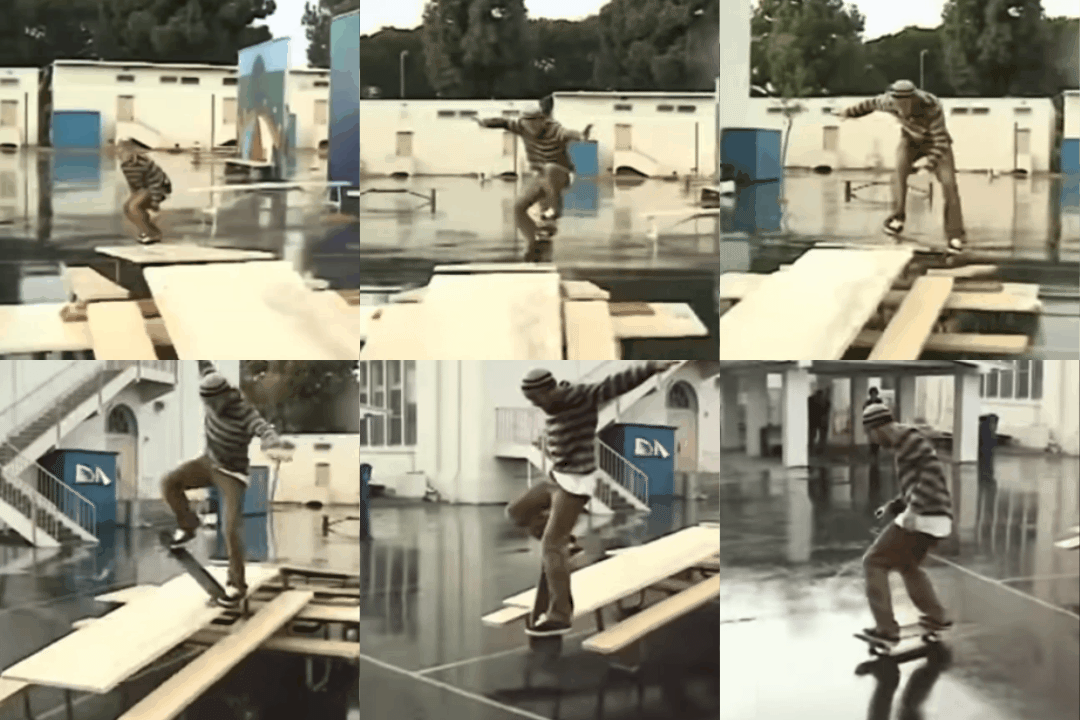
There’s no way my middle school skate crew would have had as much fun skateboarding if the Tilt Mode Army hadn’t made their videos. We loved everyone, but especially Louie Barletta, who seemed like the mascot, and Marc, who felt like the captain. For us, Man Down made Marc a God. Because while anyone can copy clothing, tricks and even form, it’s impossible to emulate authentic goofiness and clever humor. Man Down showed us that difficult skateboarding is best fused with silliness and high-level messing around. It’s good to dress like a dork and do dork tricks before and/or after mind-melters. It’s fine to set up janky ramps in an ugly parking lot and call it a street spot. Chauncy Peppertooth and his companions demonstrated that skateboarding could and should always be fun.
Tilt Mode Army (2000)
I actually didn’t see the first Tilt Mode video until after Man Down came out on DVD, but Marc’s Tilt Mode Army part is an perfect compliment to his Rolling Stones-soundtracked masterpiece. Moodier and more serious, but still mind-boggling, relatable and quotable. I don’t think I would have done so many fakie and regular mid line turnarounds if it wasn’t for Marc.
Yeah Right! (2003)
Yeah Right! felt like yet another Marc Johnson arrival. He surprised the world with an introduction to Chocolate, adding a crucial ingredient to an already highly anticipated video. We all loved enjoi, but seeing him in the Crail camp elevated him, somehow. Continued his God-like ascension.
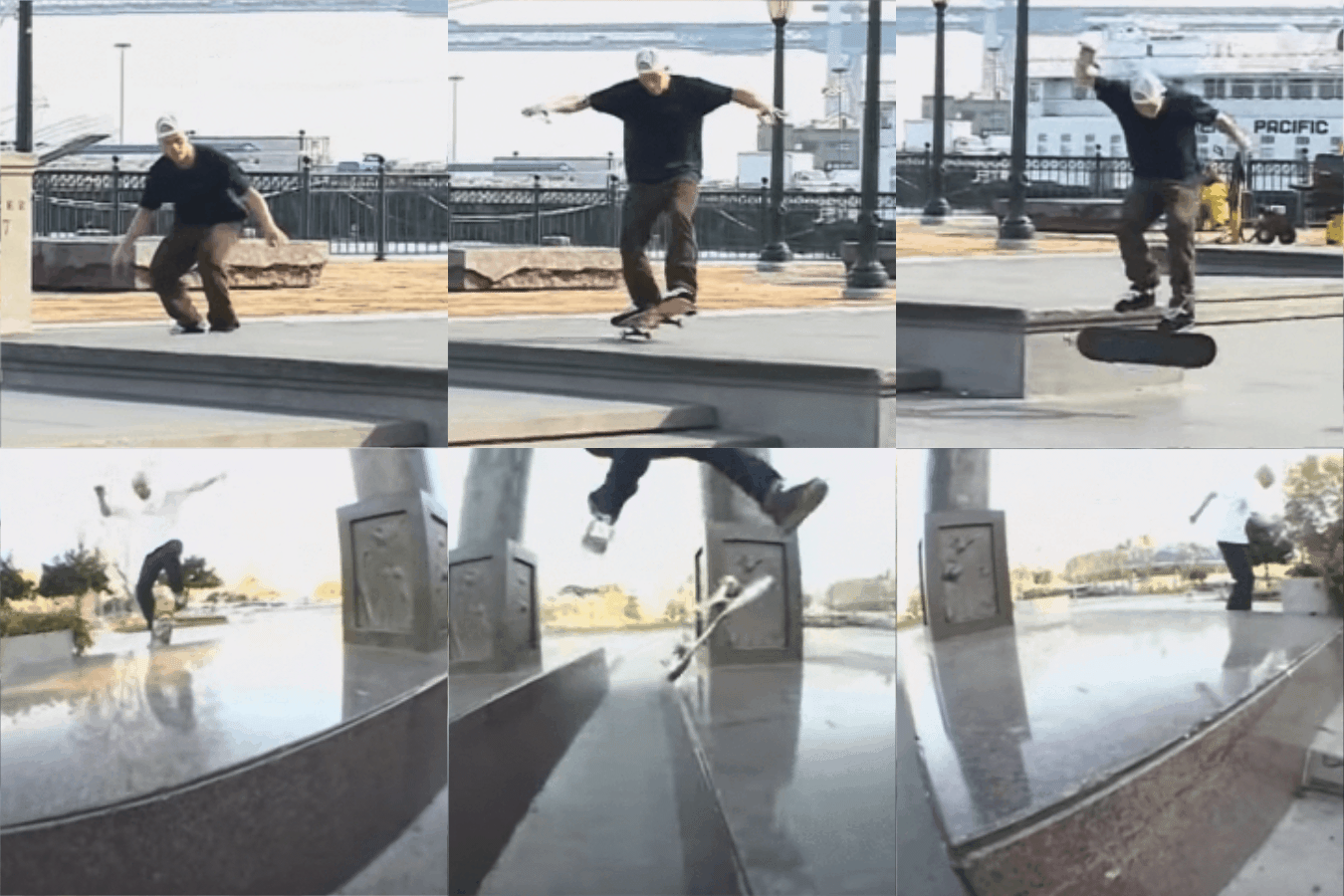
There are so many beautiful moments from this part. I love the flowy lines, NBD bangers, and clever sequences. The song seemed to capture the essence of Marc during this period. Sadly, the song wasn’t the same on the mass-produced DVD. A bunch of the songs were different and I never understood what happened there. It was even edited differently. Must have been something with the music rights. So if you were lucky to own the VHS or the “limited edition” DVD, you know the feeling I’m talking about with this song. And if you only had the other one, track the original down on YouTube and download it, ASAP.
Hot Chocolate (2004)
Hot Chocolate revealed a more personal, candid side of Marc than we’d previously seen. We also got to see a taste of the work ethic we would eventually learn a whole lot more about. A short and simple part, but one my friends and I were obsessed with.
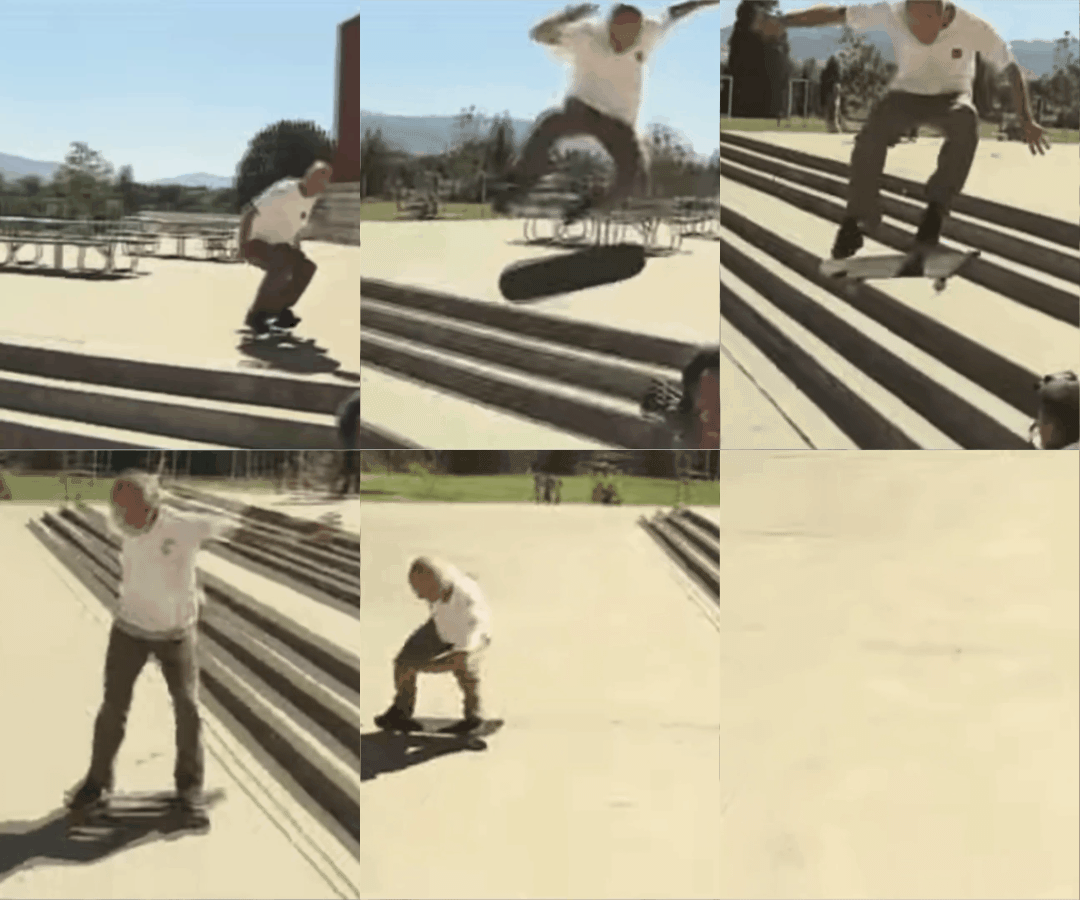
I used to think it was Arto in Sorry who made me want to switch tre flips down stairs, but after rewatching Marc’s Hot Chocolate part, there’s no mistaking that it was Marc. Not just this part, but every part has a good one. The simple, most elegant flip trick that can be done.
Fully Flared (2007)
Fully Flared arrived almost twenty years ago, but I remember the day I first watched it like it was yesterday. I was in my dorm room with John Lupfer. We were both sponsored ams, and we’d heard stories from the lucky guys who went to the world premiere. We turned off the lights for our own private premiere experience. It was like nothing I’d ever seen. A bar had been raised, with Marc seemingly taking it higher than I thought imaginable. Each song carried its own feeling, like we got three parts in one. John and I would each go out and start skating differently, as did the rest of the skateboarding world. Rightfully, a Thrasher Magazine Skater of the Year trophy would follow. And though Marc took a break, this wouldn’t be the last Marc Johnson part we’d get. But it almost was, as filming for Fully Flared almost killed him.
Marc was very candid about his struggles with alcohol and depression, particularly during the Fully Flared era. I suggest watching or revisiting his interviews and podcasts. As of writing this, we don’t yet know a cause of death, but from the Instagram obituaries written by the people closest to him, there are hints of suicide or overdose. Whether intentional or not, Marc’s death is a tragedy. Cause doesn’t change its permanence.
When I lost one of my best friends to an accidental overdose, the first person who confirmed his death told me it was suicide. Hearing that destroyed me. Imagining one of my friends in such a depression that he would kill himself is horrible. The guilt is tormenting. Questions like, “What could I have done differently?” haunt you. I hated it. To learn later it was an accident, I felt a huge relief. The sadness remains, and addiction-related deaths usually involve some level of self-destruction and depression. But accidents happen. We can accept accidents. A suicide reverberates differently. A person should never feel like they should end their own life. Especially someone like Marc, who brought so much joy, inspiration and value to the world. Thinking of his family, friends, and thousands of other fans like me, I really hope it wasn’t suicide.
There has been a lot shared about Marc since his death. Many thoughtful send-offs and beautiful tributes. I hope he knows he was loved. One that stuck with me is an interview that Anthony Pappalardo (the writer) did with Marc in 2017. In it, Marc is lamenting about how Instagram and the internet changed the way we look at pro skaters:
“That’s what social media has done to our heroes. It has robbed us of our heroes. When I started skating you had two magazines a month that were really small and you had maybe two videos a year, maybe. You only got to see your favorite skaters periodically and everything was left to the imagination. You built up this thing about these people and you picked your favorites and there was such a gnarly gap, there was a wall. There was a divide between you and your hero.”
Marc never did too much on social media. Aside from his occasional interviews, I never got to know him. He remains my hero. Despite his well-documented and self-confessing flaws. My heart breaks for all of Marc’s friends and family. Especially for his son, Avery, who is a phenomenal skateboarder in his own right. And since I never got to say it in person, I’ll say it here:
Thank you, Marc.
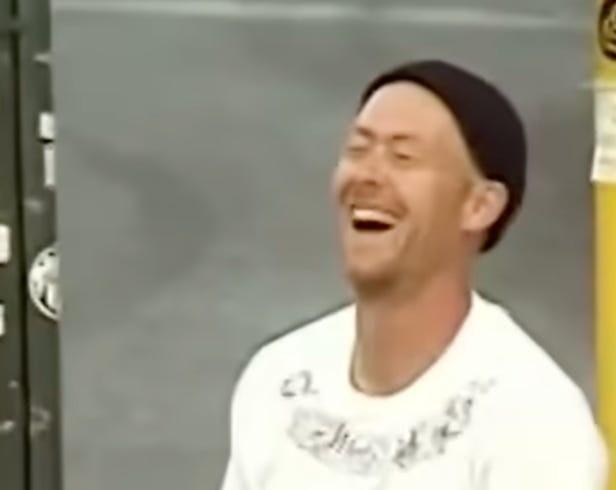
Also, thank you everyone who pointed a camera at Marc or edited his footage during his time on Earth. The Memory Screen compilation is exceptionally great as it works in some memorable selects from tour videos and montages. Here are the parts I didn’t watch growing up.
More reading, listening or watching Marc:
https://www.simplemagic.ca/take-something-that-was-pure-thought-and-make-it-reality/
https://boiltheocean.wordpress.com/2026/05/29/watching-forever/

A beautiful tribute, Walker.
Excellent read & thank you for writing this tribute